We earn a commission from qualifying Amazon purchases, at no extra cost to you. How this works.
The best helmet you can actually buy right now, EPP liner, SPRfit ratchet system, four shell sizes, and in stock.
Check Price on Amazon →Top Pick: Cascade CPV-R
★★★★★
The best all-around lacrosse helmet that is actually in stock: EPP liner protection, an on-the-fly ratchet fit, and four shell sizes so it fits real heads.
In This Guide
Last Updated: August 2026 | By LPT
Lacrosse helmets are the one piece of gear you don’t compromise on. Every other piece of equipment affects your performance, the helmet affects whether you get back up. But buying one is genuinely confusing: there are NOCSAE standards, NFHS compliance rules, different fits for different head shapes, and a price range that runs from about $130 to nearly $500.
There’s a second problem nobody warns you about, and I hit it head-on while rebuilding this guide in August 2026: the lacrosse helmet aisle on Amazon is a minefield of dead listings. I re-checked every helmet this guide used to recommend and most of them had gone unavailable, same helmets, but the old product pages were abandoned and the stock had moved to brand-new listings. So every helmet below was re-verified as purchasable on the day this guide was updated, and I say plainly which ones are sitting on thin stock.
Below are the best lacrosse helmets you can actually buy in 2026, ranked for real players, not marketing copy. Whether you’re a beginner, a parent buying for a 10-year-old, or a high schooler upgrading, there’s a clear answer for each situation.
⚠️ Read this before you buy any helmet online
Cascade’s own Amazon storefront has thinned out badly. Most current lacrosse helmet listings are run by resellers (Lacrosse Unlimited, City Sports and similar) rather than the manufacturer. That’s normal and they’re legitimate lacrosse retailers, but it means stock moves fast and listings die without warning. When your helmet arrives, check the NOCSAE seal and the manufacture date stamped inside the shell before the return window closes. Cascade and STX both build to the NOCSAE standard required for sanctioned play; confirming the sticker takes ten seconds and is worth doing on any marketplace purchase.
As an Amazon Associate, we may earn from qualifying purchases. This page contains affiliate links, at no extra cost to you.
⚡ Quick Picks: Best Lacrosse Helmets 2026
| Best Overall Cascade CPV-R | Check Price → |
| Best Premium Cascade XRS Pro | Check Price → |
| Best Non-Cascade Pick STX Aero | Check Price → |
| Best for Youth (U12) Cascade CS-R | Check Price → |
| Best Adult Step-Up Cascade SL | Check Price → |
What Makes a Good Lacrosse Helmet?
Before rankings, here’s what actually matters when evaluating a lacrosse helmet:
- NOCSAE Certification, Non-negotiable. Every helmet on this list is NOCSAE certified. Don’t buy one that isn’t. (More on this below.)
- NFHS/NCAA Compliance, If your player is competing in a sanctioned league, the helmet must be approved. All picks below qualify for high school play.
- Fit System, How the helmet adjusts to your head shape matters enormously for comfort and safety. Modern dial-fit systems are much better than old foam-pad systems.
- Field of Vision, The cage design affects how much you can see, which affects performance. Better helmets have wider sight lines.
- Ventilation, Lacrosse is a warm-weather sport. Helmets that trap heat cause fatigue. Look for solid ventilation channels.
- Weight, Lighter helmets cause less neck fatigue over long games and practices.

NOCSAE Certification: What It Means and Why It’s Non-Negotiable
🛡️ What Is NOCSAE?
NOCSAE stands for the National Operating Committee on Standards for Athletic Equipment. It’s an independent nonprofit that sets performance standards for sports protective equipment. A NOCSAE-certified lacrosse helmet has been tested to specific impact thresholds that reduce the risk of serious head injury during play.
Why it matters: Leagues at every level, youth, high school, club, and college, require NOCSAE certification. A non-certified helmet isn’t just worse protection; it’s not legal for sanctioned play. When shopping, look for the NOCSAE seal stamped inside the helmet. If you can’t find it, don’t buy it.
Expiration: Helmets are certified for 5-10 years from the manufacture date. Check the sticker inside any used helmet before playing, an expired certification may not be accepted at some leagues.
Best Lacrosse Helmets of 2026: Full Reviews
1. Cascade CPV-R, Best Overall
Price: around $175 | Best For: Middle school through high school, and anyone who wants one helmet that just works
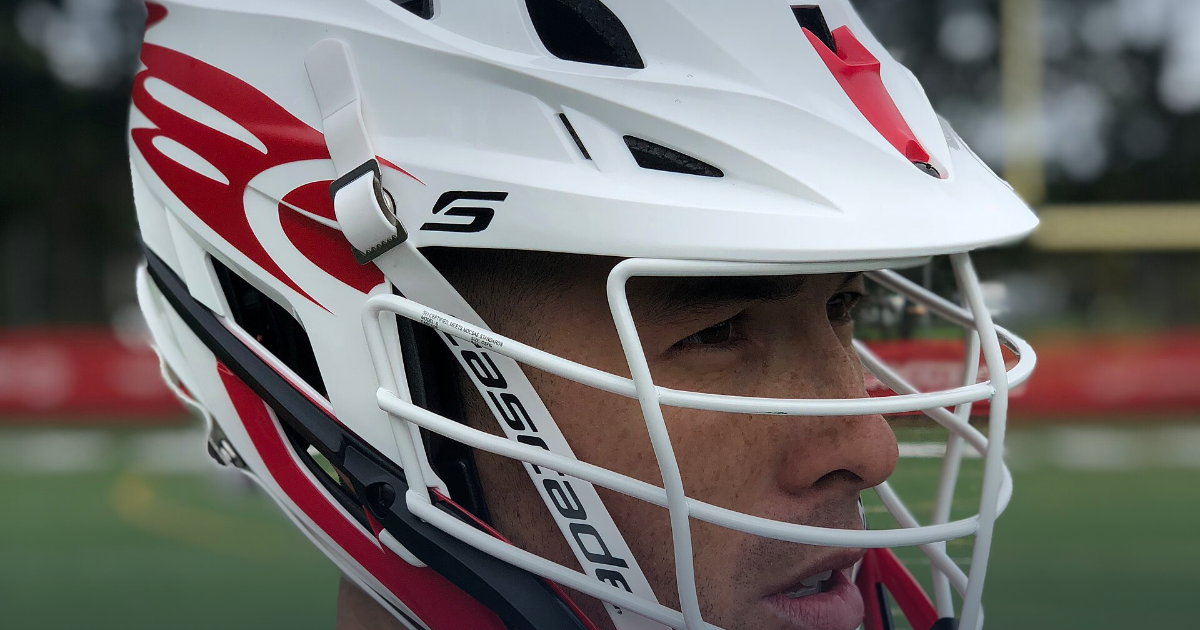
The Cascade CPV-R is the helmet I’d hand to almost any player walking into a season right now. It’s the first helmet in Cascade’s R-Series to get the EPP liner system that used to be reserved for their top-end helmets, it comes in four shell sizes instead of the one-size-fits-most approach most helmets take, and, the part that matters most in 2026, it’s genuinely in stock.
Protection: R-Series shell with an EPP liner. EPP is the foam that springs back after repeated hits rather than compressing flat like cheaper liners, which is why it’s the one spec worth paying for on a helmet you’ll wear for several seasons.
Fit System: Cascade’s SPRfit adjustable ratchet. You can tighten or loosen it mid-game with one hand, which sounds like a gimmick until you’re sweating through the fourth quarter and the helmet starts shifting. Four sizes (down to XXS) means smaller players get a real fit instead of cranking a universal shell down onto their head.
Visibility: The Chevron mask puts a slight V in the centre latitude bars to open up downward vision. That’s a ground-ball spec, when you’re bent over a loose ball, you can actually see it.
Ventilation: FreeFlow venting through the R-Series shell. Not the airiest helmet here (the STX Aero wins that), but it moves air well enough for a hot spring doubleheader.
Pros
- EPP liner at a mid-range price, the spec that actually matters
- Four shell sizes, including XXS for smaller players
- One-handed SPRfit ratchet adjusts on the fly
- Chevron mask genuinely helps on ground balls
- The most reliably in-stock quality helmet on Amazon right now
Cons
- Customised helmets can’t be returned or exchanged, you pick your colours before checkout, so measure first and get the size right
- Heavier than the XRS Pro; you’ll feel it in the third quarter of a tournament day
- Sold through a reseller storefront, not Cascade directly
Bottom line: The best balance of protection, fit and availability in 2026. If you want one helmet and you don’t want to think about it again, this is the one, just measure the head before you click, because the colour customiser makes it non-returnable.
2. Cascade XRS Pro, Best Premium Helmet
Price: around $450-$500 | Best For: Serious high school, club and college players who want the flagship
The XRS Pro is Cascade’s top helmet, and the price tells you that. What you’re paying for is vision and fit rather than a jump in raw protection: the VIXION system opens up the sides of the mask so your peripheral vision isn’t cut off by the cage, and the Pro Vision bar is angled at 32 degrees to clear your sightline looking down.
Protection: Cascade’s flagship shell with an extended rear panel that adds coverage over the occipital area, the back of the skull, which is exactly where you land when you get flipped on a dodge.
Fit System: Ergonomic Pro Fit with the 360Fit Pro moisture-managing liner. Once it’s dialled in it stops registering as a thing on your head, which is the entire point of a $490 helmet on a three-game tournament Saturday.
Visibility: The best on this list, and it isn’t close. If you play attack or midfield and you’re constantly tracking a ball coming over your shoulder, this is the tangible reason to spend the money.
Weight: Lighter than the CPV-R despite the extra coverage.
Pros
- Best field of view of any helmet here, VIXION plus the 32° Pro Vision bar
- Extended rear panel for real occipital coverage
- 360Fit Pro liner handles sweat better than anything else on this list
- Lighter than helmets costing a third as much
Cons
- It’s roughly three times the price of the CPV-R, and the protection gap is nowhere near three times
- Amazon stock is thin, it comes and goes through reseller listings, so it may not be there when you look
- Genuinely overkill for a beginner or a casual rec player
Bottom line: Worth it if you’re a serious player who wants the vision advantage and has the budget. Everyone else should buy the CPV-R and put the other $300 toward a decent shaft and a season of club ball. We’ve got a longer write-up in our Cascade XRS Pro review.
3. STX Aero, Best Non-Cascade Pick
Price: around $280 | Best For: Players who run hot, and anyone who doesn’t want a Cascade
Cascade dominates this market so completely that most guides forget anyone else makes helmets. STX does, and the Aero is a real alternative rather than a token one. Its pitch is airflow: the AEROFLO system runs 11 vents for multi-directional flow, paired with an odour-resistant liner that repels moisture instead of soaking it up. If your kid’s helmet currently smells like a gym bag by week three, that second detail is not a small thing.
Protection: STX’s current-generation shell with a technical foam layer. It’s a lighter build than Cascade’s EPP helmets, aimed at cutting weight rather than maximising liner thickness.
Fit System: The FIT-SENSE click strap at the rear does the main adjustment, and the cheek and forehead padding is removable so you can tune the volume to your head shape. That removable-pad approach is genuinely useful if you’re between sizes.
Sizing: One size, fitting most teens and adults up to a 24-inch head circumference. Measure before you buy, there’s no small-shell option to fall back on.
Weight: The lightest helmet on this list. Aerodynamically shaped to shave weight, and you notice it in the fourth quarter.
Pros
- 11-vent AEROFLO system, the best ventilation here by a clear margin
- Odour-resistant liner that repels moisture rather than absorbing it
- Lightest helmet on this list
- Removable cheek and forehead padding to fine-tune the fit
- A real option if you want out of the Cascade monoculture
Cons
- One size only, if your head is under about 21 inches or over 24, this helmet is simply not for you
- Costs the same as the Cascade SL without the EPP liner
- Newer model, so there’s far less long-term feedback on it than on the R-Series
Bottom line: Buy it for the ventilation and the weight. If you play in genuine heat or you’ve had a helmet turn swampy on you before, the Aero solves a problem the Cascades don’t. Just measure your head first, one size means one size.
4. Cascade CS-R, Best for Youth Players (U12)
Price: around $130 | Best For: Players under 12
Youth helmets are a genuinely different product, not just a small adult helmet. They’re built for heads that are still growing, they weigh less, and the liner is tuned for the kind of collisions that actually happen at that age. The Cascade CS-R is the one to buy, and it’s the best-value helmet in this entire guide.
Why youth sizing matters: An adult helmet on a young player is too heavy and sits too low. It blocks vision and pushes the head into bad posture, and players who start that way build habits that are hard to coach out later. Getting the size right on day one prevents all of it.
Protection: A Poron XRD foam liner plus Cascade’s Gen 3 EPP system, engineered specifically around the collisions that happen at the U12 level rather than scaled down from an adult model. The FutureStar Mono R shell is a single piece, shell and visor together, which stiffens the whole structure against frontal impacts.
Fit System: The Full Pivot System pivots the rear third of the liner to grip the back of a smaller head, with memory foam side pads for lateral fit. It’s one-size-fits-most within the youth range, so measure before ordering.
Visibility: The Jr. R mask uses a 3-bar design built for smaller faces. Fewer bars means more vision and less weight, a real advantage for a player still learning to track a ball.
Pros
- Purpose-built for under-12 play, not a shrunken adult helmet
- Gen 3 EPP liner and Poron XRD foam at the lowest price in this guide
- 3-bar Jr. mask gives young players better vision
- One-piece shell and visor for frontal impact rigidity
Cons
- Hard cutoff at 12 years old, this is not a helmet a 13-year-old should be wearing, and it isn’t a “buy big, grow into it” purchase
- One-size-fits-most within the youth range, so an unusually large or small head may not fit well
- Most players will outgrow it in 2-3 seasons
Bottom line: For a player under 12, this is the call, and at around $130 it’s the best money-to-protection ratio on this page. Once they hit 12, move them to the CPV-R.
👦 Younger than 9? And a note on the XRS Youth
For players under 9, the CS-R is still too much helmet. The STX Rival Junior (around $130) is built specifically for U9 and fits heads up to a 22-inch circumference, with an engineered plastic shell, a technical foam layer and max-size vent holes. It’s the one helmet in this guide whose listing explicitly states that it meets NOCSAE standards. One real catch, straight from STX: it does not fit over glasses. If your kid wears glasses on the field, this isn’t the helmet. Check the STX Rival Junior →
What about the Cascade XRS Youth? It’s back in stock, but it’s listed around $360, more than double the CS-R and well over the adult CPV-R. Unless you specifically want the XRS shell on a youth player, I can’t make the value case for it. Buy the CS-R.
Still sorting out the rest of a young player’s bag? Our best youth lacrosse sticks guide and the full lacrosse gear checklist cover what else they actually need.
5. Cascade SL, Best Adult Step-Up
Price: around $280 | Best For: High school players who want more than the CPV-R without paying XRS Pro money
The Cascade SL fills the gap between the $175 CPV-R and the $490 XRS Pro. It’s built around Cascade’s 7 Tech+ system, which manages energy transfer in the specific zones that take the most contact rather than padding everything evenly. If you’re playing a full high school season and the CPV-R feels like the floor rather than the answer, this is the sensible step.
Protection: 7 Tech+ zone-based energy management over a lightweight EPP foam liner. The design goal is targeted protection at lower weight, rather than simply more foam.
Fit System: Adjustable chin strap plus removable side pads, so you can tune the internal volume to your head instead of accepting whatever the shell gives you. Useful if you’re between sizes or wear your helmet over long hair.
Ventilation: The XFlow Exhaust system pulls heat out through the rear of the shell. Better than the CPV-R, not as aggressive as the STX Aero’s 11 vents.
Weight: Deliberately engineered light. Between that and the venting, it’s the more comfortable helmet on a long tournament day than the CPV-R.
Pros
- 7 Tech+ zone-based protection, a real step up from the base R-Series
- Removable side pads let you dial in the volume
- XFlow Exhaust venting handles heat well
- Light for how much protection it carries
Cons
- $100 more than the CPV-R, and for most high school players the CPV-R is already enough helmet
- Stock runs thin, it’s a reseller listing, not a Cascade storefront
- If ventilation is your main reason for upgrading, the STX Aero does that better for the same money
Bottom line: A genuine middle option in a market that mostly forces you to choose between $175 and $490. Buy it if you want better venting and zone protection and you’ll actually use it, otherwise the CPV-R is the smarter spend.
Lacrosse Helmet Comparison Table
| Helmet | Price | Best For | Liner | Fit System | Verdict |
|---|---|---|---|---|---|
| Cascade CPV-R | ~$175 | Middle school → high school | EPP | SPRfit ratchet, 4 sizes | 🏆 Best Overall |
| Cascade XRS Pro | ~$490 | Serious HS / club / college | 360Fit Pro | Ergonomic Pro Fit | Best Premium |
| STX Aero | ~$280 | Players who run hot | Technical foam | FIT-SENSE, one size | Best Non-Cascade |
| Cascade CS-R | ~$130 | Under 12 only | Gen 3 EPP + Poron XRD | Full Pivot, youth | Best Youth Value |
| Cascade SL | ~$280 | High school step-up | EPP, 7 Tech+ | Removable side pads | Best Step-Up |
| STX Rival Junior | ~$130 | Under 9 only (≤22″ head) | Technical foam | Adjustable, one size | Best for U9 |

Lacrosse Helmet Buying Guide
NOCSAE Certification: Non-Negotiable
Every lacrosse helmet used in sanctioned competition must be NOCSAE certified. Don’t buy a helmet that isn’t, it won’t be allowed in games, and more importantly, it hasn’t been tested to real safety standards. Every helmet on this list is certified.
Youth vs. Adult Sizing
Youth helmets are a distinct category, not just smaller adult helmets. Don’t put an adult shell on a younger player, it will be too heavy and sit too low, blocking vision and forcing bad head position. The age brackets that actually matter:
- Under 9: STX Rival Junior, fits heads up to 22 inches.
- Under 12: Cascade CS-R, built specifically for U12 collisions.
- 12 and up: Move to an adult helmet. The Cascade CPV-R is the default, and its XXS shell fits smaller players who’ve aged out of a youth helmet but aren’t full size yet.
Resist the urge to buy big so they can grow into it. A loose helmet rotates on impact, which is exactly the failure mode the helmet exists to prevent.
How Long Do Lacrosse Helmets Last?
Most helmets are rated for 5-10 years from the date of manufacture before NOCSAE recertification is required. Check the sticker inside your helmet. If you’re buying a used helmet, verify the manufacture date, an expired helmet may not be legal for league play. When in doubt, buy new.
What to Avoid
Avoid uncertified helmets sold on generic marketplaces for under $70. These haven’t been tested to real impact standards, won’t be accepted in sanctioned play, and offer genuinely inferior protection.
Where the real floor sits in 2026: about $130, and both helmets at that price (the Cascade CS-R and the STX Rival Junior) are youth-only. For an adult or high school player, the honest floor is the Cascade CPV-R at around $175. There is currently no cheap adult lacrosse helmet worth buying on Amazon, if you find one at $70, that’s a signal, not a bargain.
Also be careful with used helmets. NOCSAE certification runs from the manufacture date, not the purchase date, so a second-hand helmet may have very little life left in it, and you have no way of knowing what impacts it has already absorbed.
How to Fit a Lacrosse Helmet
📏 Helmet Fitting, Step by Step
- Measure head circumference with a soft tape measure, about 1 inch above the eyebrows and around the widest part of the head.
- Use the manufacturer’s size chart, every brand sizes slightly differently. Don’t assume your size from one brand transfers to another.
- Position the helmet level on your head. It should sit about two finger-widths above your eyebrows.
- Adjust the dial or straps until the helmet feels snug but not uncomfortable. It should not move when you shake your head from side to side.
- Check the cage, there should be 1-2 inches between your face and the front bars of the cage. Too close means the cage can transfer force to your face on impact.
- Test the chinstrap, you should be able to fit no more than two fingers between the strap and your chin. A loose chinstrap lets the helmet rotate on impact.
If you’re between sizes, size up and adjust the padding, a too-tight helmet is more uncomfortable and doesn’t offer better protection.

FAQ: Lacrosse Helmets
What lacrosse helmet is used most in high school?
Cascade’s R-Series shells dominate high school sidelines, and in 2026 the CPV-R is the one most high school players are realistically buying, it’s the current R-Series helmet that’s actually stocked and it sits at a price a family will pay. You’ll still see plenty of older CS-R and XRS helmets on the field, but the CS-R is a youth helmet built for under-12 play; it shouldn’t be a high schooler’s helmet regardless of how common it looks.
Do I need to buy any accessories with a lacrosse helmet?
Your helmet comes with a cage, but you’ll also need a mouthguard (worn under the cage). Some leagues require colored mouthguards for visibility. A mouthguard is a separate, inexpensive purchase, a basic $5-$10 option is fine to start.
Can I use a football helmet for lacrosse?
No. Football helmets are not NOCSAE certified for lacrosse and are not legal for sanctioned play. They’re also heavier and reduce visibility significantly compared to a lacrosse-specific helmet.
Is the Cascade CS-R good enough for travel lacrosse?
For a U12 travel team, yes, the CS-R is a legitimate club-level helmet for that age group and its Gen 3 EPP liner is the same class of protection you’d get in a much pricier helmet. But it’s built for players under 12. Once your player ages past that, the CS-R is the wrong helmet no matter how good the pocket of change looks; move up to the CPV-R.
What’s the difference between the Cascade CS-R and the Cascade CPV-R?
Age, mostly. The CS-R is a youth helmet, one-piece FutureStar shell, 3-bar Jr. mask, Full Pivot liner, all engineered around players under 12. The CPV-R is the adult/teen helmet: four shell sizes, the SPRfit ratchet, the Chevron mask, and a bigger overall shell. They share the EPP liner technology and the R-Series design language, which is why they look related. If the player is under 12, buy the CS-R and save $45. If they’re 12 or older, buy the CPV-R, the CS-R will not fit them properly and was never meant to.
How often does a lacrosse helmet need to be replaced?
Helmets carry a NOCSAE certification date, most are valid for 5-10 years from manufacture. Regardless of certification, replace your helmet after any significant impact, if the shell is cracked, or if the liner feels compressed and no longer springs back.
Do girls need a different lacrosse helmet?
Women’s lacrosse uses different protective standards, specifically, NOCSAE-certified goggles rather than a full cage helmet for field players. Goalies wear a helmet. The helmets on this list are for men’s/boys’ lacrosse. Women’s players should look for NOCSAE-certified goggles approved for women’s play.
Key Takeaways
📋 Key Takeaways
- NOCSAE certification is the only non-negotiable. Every helmet must have it. Check for the seal inside before buying anything.
- The Cascade CPV-R is the right answer for most players. High schoolers, beginners upgrading, parents buying for a committed kid, EPP liner, four shell sizes, and reliably in stock.
- Age decides the youth pick, not price. Under 9 → STX Rival Junior. Under 12 → Cascade CS-R. Twelve and up → an adult helmet. The CS-R is a U12 helmet and shouldn’t be worn past that.
- Serious players can step up, but know what you’re buying. The XRS Pro buys you vision and comfort, not a large jump in protection. The Cascade SL is the sane middle at around $280.
- $130 is the floor, and it’s youth-only. For an adult or high school player the honest floor is about $175. Anything under $70 calling itself a lacrosse helmet is not one.
- Check listings before you trust them. Helmet listings on Amazon die constantly, the same helmet often reappears under a brand-new product page. Every helmet in this guide was re-verified as purchasable in August 2026.
- Measure head circumference before buying. Helmet fit is safety, not preference. Two minutes with a tape measure prevents buying the wrong size.
Final Verdict
For most lacrosse players in 2026, the answer is the Cascade CPV-R at around $175. It has the EPP liner that actually matters, it comes in four shell sizes instead of hoping one fits, the SPRfit ratchet lets you adjust it without stopping play, and, not a small thing this year, you can actually buy it. If you’re a serious player chasing the best vision in the game and the budget is there, step up to the Cascade XRS Pro. If you run hot or want out of the Cascade monoculture, the STX Aero ventilates better than anything else here. And if you’re shopping for a young player, buy by age: the Cascade CS-R under 12, the STX Rival Junior under 9.
One rule applies to every pick on this list: don’t buy an uncertified helmet to save money. Lacrosse is a contact sport. The helmet is the one item where cutting corners has real consequences.
Our Top Pick
Cascade CPV-R, real EPP protection, four shell sizes, a one-handed ratchet fit, and the most dependable stock in the category.
📖 Related Guides
For full gear protection, pair your helmet with the right lacrosse shoulder pads. Buying for a younger player? Our middle school lacrosse gear guide covers the full kit, and the lacrosse gear checklist makes sure nothing gets forgotten on day one.
Lax Equipment Guide participates in the Amazon Services LLC Associates Program, an affiliate advertising program designed to provide a means for sites to earn advertising fees by advertising and linking to Amazon.com.
Related Guides