We earn a commission from qualifying Amazon purchases, at no extra cost to you. How this works.
Cascade CPV-R + throat guard
The goalie helmet setup you can actually buy, EPP liner, four shell sizes, plus the required TP-S throat guard.
Check Price on Amazon →Best Chest Protector: STX Shield 400
★★★★½
Best goalie chest protector. Excellent protection-to-weight ratio and good ventilation for a position that takes a beating.
In This Guide
Last Updated: August 2026 | By LPT
This page contains affiliate links. We may earn a small commission at no extra cost to you.
Quick Answer: The Cascade CPV-R + throat guard is the best goalie helmet setup for protection and visibility. For chest protectors, the STX Shield 400 is the top pick. The StringKing Metal 3 Pro is the best goalie shaft. For players putting together a full setup, these four pieces are the ones to get right, and the full checklist below covers the rest.
⚠️ Goalie Safety Priority
Lacrosse goalies take shots at 70-90 mph from close range. Chest protector and helmet are non-negotiable, never skip or downgrade them to save money. If you’re building out a budget setup, cut costs on the shaft or gloves before touching the helmet or chest protector.
Quick Picks: Best Lacrosse Goalie Equipment 2026
| Item | Top Pick | Price |
|---|---|---|
| Goalie Helmet | Cascade CPV-R + throat guard | Check Price → |
| Chest Protector | STX Shield 400 | Check Price → |
| Goalie Shaft | StringKing Metal 3 Pro | Check Price → |
| Goalie Head | STX Eclipse 3 | Check Price → |
| Goalie Gloves | STX Cell VI Goalie | Check Price → |
Why Goalie Gear Is Different
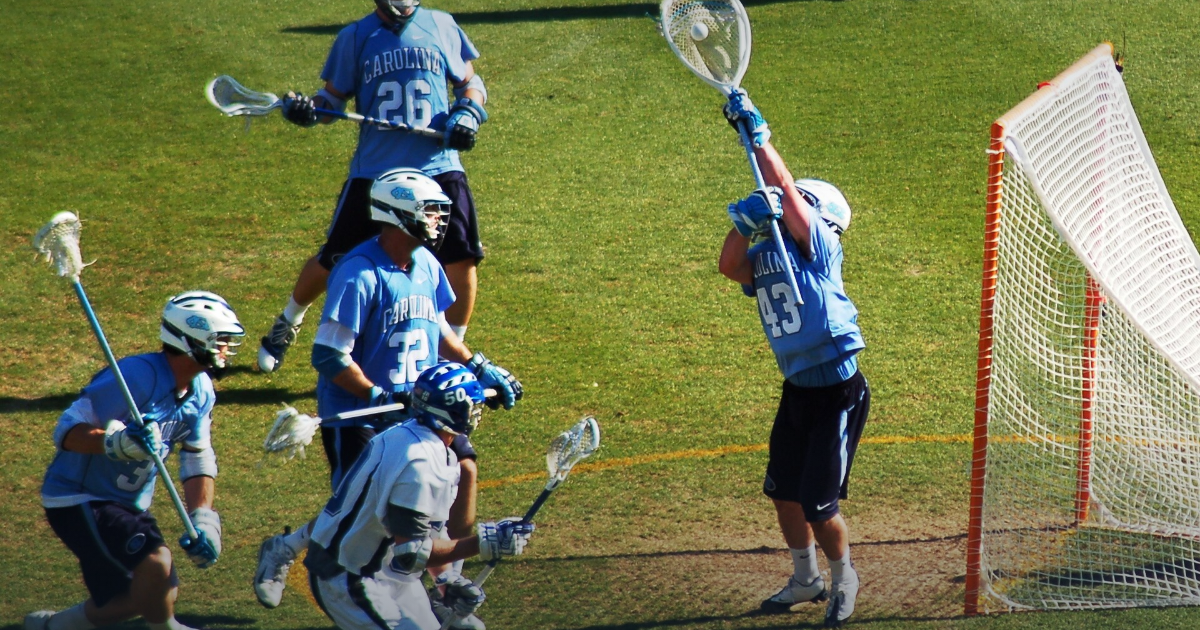
Lacrosse goalies take shots traveling 70-90 mph from close range. The protection requirements are completely different from field players. A goalie chest protector absorbs impact that would injure an unprotected torso. Goalie helmets are the same NOCSAE-certified models field players wear, but they must carry a throat guard attached to the bottom of the mask. Goalie gloves extend further up the wrist. And the goalie shaft is much shorter (40″ vs 60″) so the larger goalie head can be positioned quickly in the crease.
If you’re buying goalie equipment for a youth player, the chest protector and helmet are non-negotiable investments. Don’t cut corners on those two pieces.

Best Goalie Helmet Setup: Cascade CPV-R + Throat Guard
Price: ~$175 (helmet) + ~$35-40 (throat guard) | Best For: High school, college, and competitive youth goalies
Here’s something that surprises a lot of new goalie parents: there is no separate “goalie helmet” in men’s field lacrosse. Goalies wear the same NOCSAE-certified helmets as field players, in 2026 the Cascade CPV-R is the one to buy, since it has the EPP liner and it is reliably in stock, with one mandatory addition: a throat guard. Every sanctioned league requires goalies to attach a throat protector to the bottom of the face mask, and refs will hold your goalie out of the game without one.
The Cascade TP-S throat piece attaches to all recent Cascade helmets (XRS, XRS Pro, CS-R, CPV-R) with the included hardware. It’s a $35-40 part, buy it the same day you buy the helmet.
Pros
- Same elite protection trusted by field players at every level
- NOCSAE certified, cleared for all sanctioned leagues
- TP-S throat guard mounts cleanly with included hardware
- Adjustable fit system works for most head shapes
Cons
- Helmet plus throat guard runs about $210 together
- Throat guard sold separately, don’t forget it
Bottom line: Cascade CPV-R plus a TP-S throat guard is the goalie setup for high school and up, and both are verified in stock.
Check Helmet Price on Amazon → Check Throat Guard Price →
Best Chest Protector: STX Shield 400
Price: ~$140 | Best For: Any goalie who needs solid protection without restricting throws
The STX Shield 400 is the chest protector for goalies who haven’t bought one yet. The foam padding covers sternum, ribs, and shoulders without being so bulky that you lose arm mobility. The articulating shoulder caps allow full range of motion for outlet passes, which is critical, a goalie who can’t throw accurately after a save is a liability.
Sizing is the most important factor. It should cover from the base of your neck to your waist with no gaps. If the protector rides up and exposes your lower ribs, size up. If it hangs below your waist and gets in the way of movement, size down.
Pros
- Excellent protection-to-weight ratio
- Articulating shoulder caps don’t restrict passing
- Good ventilation for long games
Cons
- Sizing can vary, try before buying if possible
- Less padding than Cascade goalie chest pad
Bottom line: Best goalie chest protector for the money. Solid protection without restricting movement.
Best Goalie Head: STX Eclipse 3
Price: ~$70-90 | Best For: Competitive goalies at every level
The STX Eclipse 3 has been the dominant goalie head in lacrosse for years. The wide scoop makes ground balls easier, the wide face gives you maximum catching area, and the offset design positions your pocket for optimal ball retention after saves. If you’re playing at any competitive level, the Eclipse 3 is what you’ll see on the sideline.
For youth goalies, consider the STX Eclipse 2, same design, slightly lower price, and appropriate for younger players who are still developing their game.
Pros
- Wide face gives maximum save area
- Solid sidewalls that don’t warp under ball impact
- Good stringing channels for consistent pocket
Cons
- Heavier than field player heads
- Not versatile if you want to convert to field play
Bottom line: The go-to goalie head at every level. No other head comes close for serious goalies.
Best Goalie Shaft: StringKing Metal 3 Pro
Price: ~$120 | Best For: Any goalie, beginner to varsity
Goalie shafts run 40″ (vs 60″ long poles), and the two qualities to prioritize are grip and durability. The StringKing Metal 3 Pro is a purpose-built goalie version of StringKing’s metal shaft line, a stiff, durable metal handle that holds up to daily reps of stopping 70+ mph shots without the flex or rattle budget shafts develop. StringKing publishes exact weights for their shafts, which is the kind of no-marketing spec honesty we like.
Pros
- Purpose-built goalie shaft, not a cut-down field shaft
- Stiff under hard shots, no flex where you don’t want it
- Published weight specs instead of marketing adjectives
Cons
- At ~$120 it costs more than the budget alloy shafts it replaced
- Bare metal grip, goalies who like a tacky feel will want to tape it
Bottom line: The goalie shaft that’s actually in stock and worth buying. Stiff, durable, honest specs.

Full Goalie Gear Checklist
✅ Complete Goalie Equipment List
| Item | Required? | Notes |
|---|---|---|
| Goalie helmet (NOCSAE certified) | Yes | No goalie-only model in men’s field lacrosse; use a NOCSAE player helmet plus a throat guard |
| Chest protector | Yes | Essential for safety; do not skip |
| Goalie gloves | Yes | Longer wrist coverage than field gloves |
| Goalie head + shaft | Yes | Wide head required for effective saves |
| Arm pads | Yes | Same as field players |
| Throat guard | Yes | Required in every sanctioned league; sold separately from the helmet |
| Cup (male players) | Yes | Non-negotiable for goalies |
| Shin guards | Optional | Not required but strongly recommended for youth |
FAQ: Lacrosse Goalie Equipment
What gear does a lacrosse goalie need?
A lacrosse goalie needs a NOCSAE-certified helmet with throat guard, chest protector, goalie gloves (larger than field gloves), goalie shaft (shorter and thicker), goalie head (wider), arm pads, and athletic supporter/cup. Women’s goalies have slightly different requirements, check your league rules for specifics.
Can a goalie use a regular lacrosse head?
Technically allowed, but not recommended. Goalie heads are significantly wider (typically 10-12 inches) compared to field heads (6.5-10 inches), making it dramatically easier to stop shots. Using a regular field head as a goalie is a significant disadvantage.
What makes a goalie shaft different from a regular shaft?
Goalie shafts are shorter (typically 40 inches vs 60 inches for field), and some are thicker in diameter for a stronger grip during shot saves. The shorter length allows the wider goalie head to be positioned quickly in the crease. Some goalies use regular shafts, but most benefit from a dedicated goalie shaft.
Do youth goalies need the same gear as adult goalies?
Youth goalies need the same types of gear but in smaller sizes. Many youth programs relax chest protector requirements for the youngest age groups, but full protection is always the right call. A youth goalie helmet with proper throat guard is non-negotiable at any level.
How do I choose a goalie chest protector?
Look for coverage from the collarbone to the top of your hips, including shoulder cap protection. It should allow full arm mobility, if you can’t raise your arms above your head, it’s too restrictive. The STX and Maverik goalie chest pads are the most popular options: good coverage without killing mobility.

Key Takeaways
📋 Key Takeaways
- Helmet and chest protector first, always. Goalies absorb 70-90 mph shots. Never cut corners on these two pieces regardless of budget.
- The Cascade CPV-R + throat guard is the helmet setup to buy. There is no separate goalie helmet in men’s field lacrosse, so goalies wear a NOCSAE-certified player helmet, and every sanctioned league requires a throat guard attached to the bottom of the mask.
- The STX Shield 400 is the best chest protector for the money. Solid coverage across sternum, ribs, and shoulders, with articulating shoulder caps that don’t kill your outlet passing.
- The STX Eclipse 3 is the dominant goalie head for a reason. Wide face, solid sidewalls, and consistent pocket design. Use the Eclipse 2 for youth goalies.
- The StringKing Metal 3 Pro is the goalie shaft to buy. Stiff and durable under 70+ mph shots, with published weight specs instead of marketing adjectives. Its grip is bare metal, so add grip tape if you want a tackier feel.
📖 Related Guides
Goalie gear is just one part of team protection. Check our full rankings for the best lacrosse helmets and best lacrosse shoulder pads. Need a way to carry all your gear to practice? Our best lacrosse bags guide has you covered.