
Disclosure: This page contains affiliate links. We may earn a small commission at no extra cost to you.
ECD makes some of the most respected lacrosse heads in the game. The Mirage line has been a go-to for attack players for years, and the 3.0, released in 2025, is the best version yet. ECD upgraded the stiffness by 10%, redesigned the ball stop, and thickened the rails. The question was whether those changes would improve performance or ruin what made the Mirage great.
After putting it through shooting sessions, game reps, and summer tournament play, the answer is clear: the stiffness helps. A lot.
Here’s the full breakdown, shooting feel, catching, cradling, durability, and exactly who should buy this head versus who should look elsewhere.
The Mirage 3.0 is the head we would buy for an attackman who already has a reliable release. If that is you, it is worth the money.
Check Price on Amazon →Who Is the ECD Mirage 3.0 For?
Let’s be direct: this is not a beginner’s head. The ECD Mirage 3.0 is built for attackmen and offensive midfielders who already have solid fundamentals and want a head that rewards precision shooting.
The narrow face shape and pinched sidewalls (more on these below) demand developed catching mechanics. A first-year player who’s still working on consistently catching passes will drop the ball more on this head than on a wider, more forgiving option. Once you’ve put in the time and can reliably catch passes, even slightly off-center, the Mirage 3.0 pays off enormously.
If you’re in your first season, start with the ECD Ion or a wider attack head. If you’ve been playing for a year or more, you know your position is attack, and you want the best long-range shooting head available on Amazon right now, read on.

What “Face Shape,” “Offset,” and “Pocket Location” Mean
Three terms come up constantly when reviewing lacrosse heads. Here’s what they actually mean:
Face shape: The width and geometry of the head opening. A wider face shape gives you a bigger catching target. A narrower face gives you better ball control once the ball is in the pocket, which is why attackmen prefer it.
Offset: The angle between the shaft and the head. An aggressive offset tilts the face toward you slightly when you hold the stick. This holds the ball more securely during dodges and cradles, and improves your shooting angle by keeping the pocket in a more natural throwing position.
Pocket location: Where the ball sits in the mesh, low, mid, or high. A mid-high pocket means the ball sits higher in the head. This gives you more “whip” on your shots, the ball releases with more snap, increasing throw speed. It also keeps the ball locked in while running. The trade-off is that quick low-angle feeds feel slightly less natural at first.
ECD Mirage 3.0 Key Specs
| Weight | 5.1 oz |
| Position | Attack / Offensive Midfield |
| Pocket Location | Mid / Mid-High |
| Stiffness | Extremely Stiff (10% stiffer than Mirage 2.0) |
| Sidewall Holes | 20 (evenly spaced) |
| Top String Holes | 6 |
| Face Shape | Moderately wide with pinched sidewalls |
| Legal | NCAA + NFHS (high school and college) |
| Colors | White, Black, Graphene Grey |
| Released | 2025 |
Full Performance Review
Shooting and Passing
This is where the Mirage 3.0 earns its name. The mid-high pocket combined with stiffer plastic creates a quick, clean release on long-range shots. The narrow throat channels the ball perfectly, there’s no rattle, no waver. You step into a shot and the ball goes exactly where you aimed it.
The stiffness upgrade actually improved shot speed compared to the 2.0. Stiffer sidewalls mean more energy transfers directly to the ball on release rather than getting absorbed by plastic flex. For a shooter who lives outside and takes long-range rips, you’ll feel the difference in every shooting session.
Where it’s less ideal: quick low-angle feeds from behind the cage or fast crease passes at close range. The higher pocket requires a slightly adjusted hand position for those angles. If most of your game is quick short feeds from 2-3 yards, think a crease attackman rather than a wing shooter, the ECD Ion might be a better fit.
Catching
Honest assessment: catching is the trade-off you make for this head’s shooting performance.
The moderately wide face is good, but the pinched sidewalls reduce the effective catching surface on off-center passes. If the ball is coming slightly outside your frame, you’ll miss it more often than on a wider head. This is a deliberate design trade-off, attackmen at the intermediate-to-advanced level adjust their footwork to get their head on the ball rather than relying on a wide net to compensate. The ball security you gain in the pocket is worth the narrower catching window.
On-target, two-handed catches: excellent. Ball security when you get hit mid-catch: excellent. Off-center or misdirected passes: that’s where you’ll notice the difference from a wider head.
Cradling and Ball Security
The mid-high pocket and pinched sidewalls are exceptional for cradling through traffic. The Mirage 3.0 has three diagonal struts inside the sidewalls that absorb check energy without the head flexing. When a defenseman takes a full swing at your hands in a ground ball scrum, the ball stays where it is.
The one weak spot: one-handed loose cradling. The mid-high pocket doesn’t sit as naturally for that style of carry as a mid-low setup would. If your coach wants you running and cradling one-handed regularly, consider asking your stringer to set the pocket at mid depth rather than mid-high.
Ground Balls
The redesigned scoop on the 3.0 has a forward-canted, slightly pointed shape, it digs into ground balls cleanly on turf and grass. The aggressive offset funnels the ball into the pocket once you get under it. Ground ball performance is solid for an attack head.
One adjustment: the pointed scoop asks you to come in at a lower angle than a flat-scoop head. Drop your hands lower than you might on an STX or Maverik, and it picks up clean every time.
Durability
This is where the 3.0 genuinely earns its upgrade over the 2.0. The thicker side rails and stronger scoop directly address the 2.0’s main weakness: warping in summer heat. The 3.0 holds its shape significantly better under sustained physical play and high temperatures.
For a player running a summer tournament schedule across June, July, and August, this matters. A head that warps by mid-summer means your pocket changes shape, your accuracy shifts, and you’re back at the shop earlier than you planned. The 3.0 fixed that.

Pros and Cons
Pros:
- Elite long-range shooting accuracy, the best shooting feel in this price range
- 10% stiffer than the Mirage 2.0, holds shape in summer heat, no warping
- Mid-high pocket for locked-in cradling and fast shot release
- Aggressive offset improves ball security while dodging through checks
- 20 sidewall holes for full pocket customization
- NCAA and NFHS legal for all levels of play
- Redesigned ball stop improves pocket consistency
Cons:
- Narrow catching surface, off-center passes are harder to secure
- Not beginner-friendly, demands developed catching mechanics
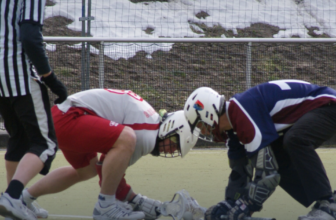
- Not suited for face-offs (too stiff to clamp effectively)
- Mid-high pocket less natural for one-handed cradling
- Not ideal for quick short crease feeds
ECD Mirage 3.0 vs. The Competition
| Head | Best for | Buy |
|---|---|---|
| ECD Mirage 3.0 (reviewed here) | Long-range shooting, elite attack | Check price |
| StringKing Mark 2A | Quick stick and fast releases, lightest here at 4.47 oz | Check price |
| STX Stallion 1K | Two-way midfield and transition play | Check price |
| ECD DNA 2.0 | Durability, holds pocket shape through a season | Check price |
Mirage 3.0 vs. StringKing Mark 2A: The Mark 2A is the lighter head, 4.47 oz against the Mirage 3.0 at 5.1 oz, and its pinched throat is built for quick stick and fast releases. The trade is power under contact, and it is not the head for physical midfield play. Choose the Mark 2A if your game is catch and release inside; choose the Mirage 3.0 if you shoot from outside.
Mirage 3.0 vs. STX Stallion 1K: The Stallion 1K is a two-way midfield head at 4.7 oz with the deepest legal offset, which is what you want for ball retention on the carry. The Mirage 3.0 is an attack head first, extremely stiff and tuned for shooting. Choose the Stallion 1K if you run the field both ways; choose the Mirage 3.0 if you live on the offensive end.
Mirage 3.0 vs. ECD DNA 2.0: Same brand, different jobs. The DNA 2.0 has stiff sidewalls that hold pocket shape through a full season and works at attack or midfield. The Mirage 3.0 is stiffer still, 10% stiffer than the Mirage 2.0, and built for long-range shooting. Choose the DNA 2.0 for durability across a season; choose the Mirage 3.0 if shooting power is what you are paying for.

FAQ
Is the ECD Mirage 3.0 good for beginners?
No. The narrow catching surface and mid-high pocket demand mechanics that take time to develop. First-year players will find themselves dropping passes they’d catch on a wider head. Start with a more forgiving head for your first season, then upgrade to the Mirage 3.0 once your catching and cradling are consistent.
What’s the difference between the Mirage 3.0 and the Mirage 2.0?
The 3.0 is 10% stiffer with thicker side rails and a redesigned ball stop. The face shape is identical. The biggest real-world difference is durability, the 2.0 had a known problem with warping in summer heat that the 3.0 fixed. Shot speed is also slightly better on the 3.0 due to the stiffer plastic.
Is the ECD Mirage 3.0 legal for high school?
Yes. It conforms to both NFHS (high school) and NCAA (college) rules, making it legal for sanctioned play at every level.
Does the Mirage 3.0 come pre-strung?
The standard Mirage 3.0 comes unstrung. You’ll need to string it yourself or take it to a local shop, most charge $15-$25 to string a head. The 20 evenly spaced sidewall holes give you a lot of flexibility to customize your pocket setup. ECD also offers pro replica versions that come pre-strung if you want to skip that step.
What shaft pairs well with the ECD Mirage 3.0?
The Mirage 3.0 at 5.1 oz pairs well with a lighter titanium or carbon fiber shaft in the 6-7 oz range, keeping total stick weight manageable for attackmen who throw constantly. See our Best Lacrosse Shafts Under $100 guide for specific recommendations.
What position is the Mirage 3.0 best for?
Attackmen and offensive midfielders who prioritize long-range shooting and ball security through checks. It’s not built for midfield two-way players who need versatility, and it’s not suited for face-off specialists at all.
Final Verdict
The ECD Mirage 3.0 is the best shooting head available on Amazon in 2026. If your game is built on shooting, step-down shots, on-the-run rips, long-range corners, this head gives you a consistent, locked-in release that holds up from the first game of spring through the last week of summer tournaments.
The trade-offs are real: you’ll drop more off-center passes, face-offs aren’t happening, and quick crease feeds take some adjustment. Those are conscious design choices that prioritize shooting performance over all-around versatility, and ECD made the right call for the audience this head is built for.
For attackmen and offensive midfielders who know what they want from a head, this is it. One of the best heads ECD has ever made, and it’s available on Amazon with Prime shipping.
⭐ BEST SHOOTING HEAD ON AMAZON
ECD Mirage 3.0 Lacrosse Head
Elite long-range shooting accuracy, 10% stiffer than the 2.0, holds its shape all summer. Built for attackmen and offensive midfielders who live outside and shoot hard.
View ECD Mirage 3.0 on Amazon →NCAA + NFHS Legal · Fast Prime Shipping · Ships from Amazon
Related Guides